VelocityBlog
Disaster Recovery as a Service: A Complete Guide for Australian Businesses
Published:
Updated:
January 8, 2026
January 8, 2026
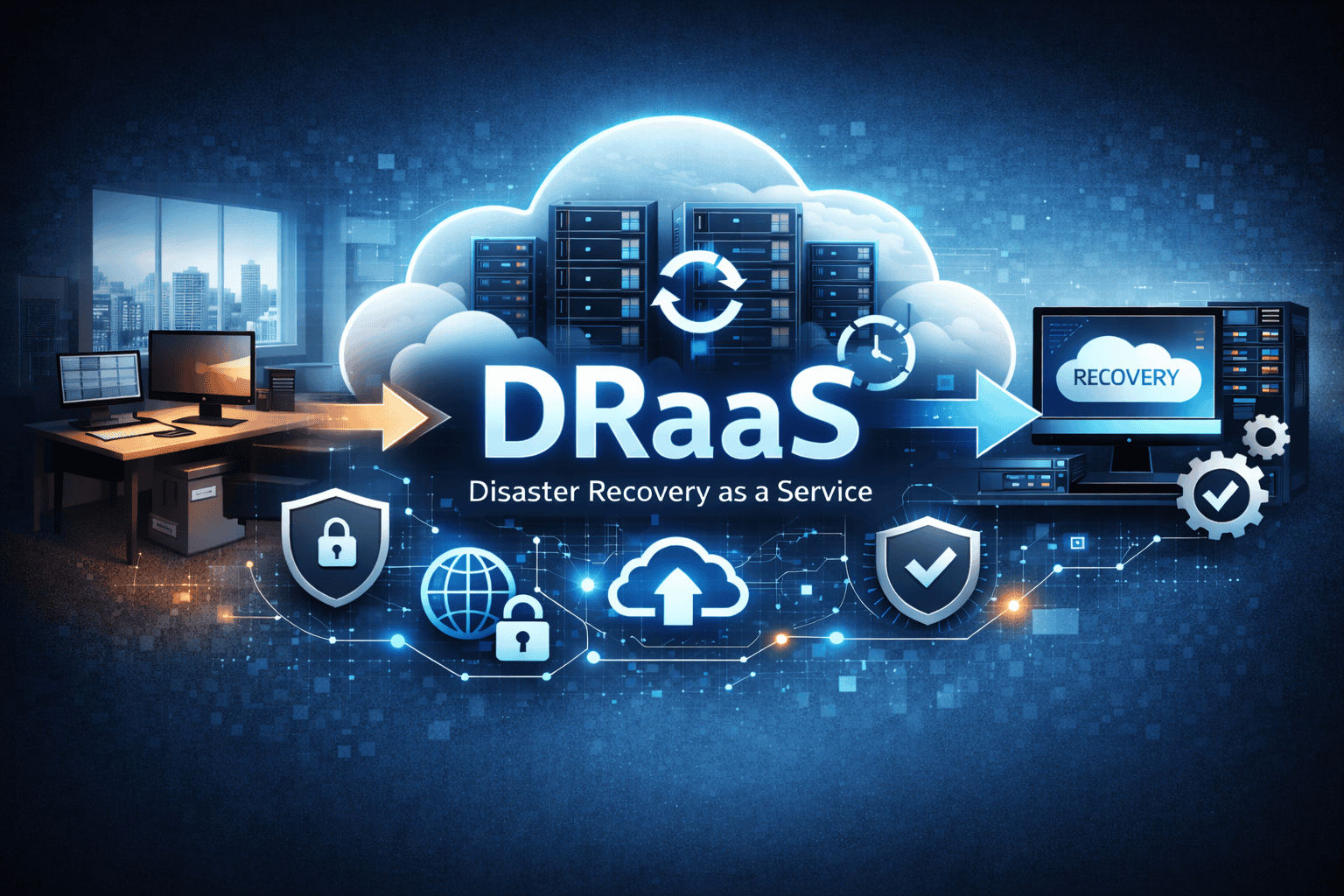
In an age where digital operations form the backbone of business success, the question isn’t whether a disaster will strike, but when. From cyber attacks and hardware failures to natural disasters and human error, the threats to business continuity are numerous and evolving daily. Disaster Recovery as a Service (DRaaS) has emerged as a critical solution for organisations seeking to protect their data and maintain operations during unexpected disruptions.
Understanding Disaster Recovery as a Service
Disaster Recovery as a Service (DRaaS) is a cloud-based solution that enables businesses to backup their data and IT infrastructure in a secure, third-party cloud environment. When a disaster occurs, whether it’s a ransomware attack, server failure, or natural catastrophe, DRaaS allows organisations to quickly recover their systems and resume normal operations with minimal downtime.
Unlike traditional disaster recovery solutions that require significant capital investment in secondary data centres and duplicate hardware, cloud disaster recovery as a service operates on a subscription model. This approach provides enterprise-level protection without the substantial upfront costs, making disaster recovery accessible and affordable to businesses of all sizes.
How Backup and Disaster Recovery as a Service Works
The foundation of effective DRaaS lies in continuous data replication. Your critical business data and applications are regularly backed up to secure cloud servers operated by your DRaaS provider. This process happens automatically in the background, ensuring your most recent data is always protected without requiring manual intervention.
When disaster strikes, the recovery process is initiated either automatically or through a manual process. Your systems are restored from the cloud backup, allowing your team to resume work quickly. Depending on your service level agreement (SLA), recovery can happen in minutes or hours, rather than the days or weeks required with traditional recovery methods.
Modern DRaaS solutions typically include automated failover capabilities, where your operations seamlessly switch to the cloud environment when primary systems fail. Once the issue is resolved, fallback procedures restore operations to your primary infrastructure with minimal disruption.
The Advantages of Disaster Recovery as a Service
Cost Efficiency and Predictable Spending
One of the most compelling advantages of disaster recovery as a service is the dramatic reduction in capital expenditure. Traditional disaster recovery requires investing in duplicate hardware, secondary data centres, and dedicated IT staff to manage these resources. DRaaS eliminates these costs through a predictable, subscription-based model that scales with your needs.
Rapid Recovery and Minimal Downtime
Time is money, especially when your business operations are offline. DRaaS solutions are designed to achieve aggressive Recovery Time Objectives (RTOs) and Recovery Point Objectives (RPOs), often measured in minutes rather than hours or days. This speed of recovery can mean the difference between a minor inconvenience and a catastrophic business impact.
Scalability and Flexibility
As your business grows, your disaster recovery needs evolve. Cloud disaster recovery as a service provides the flexibility to scale resources up or down based on your current requirements. Whether you’re expanding operations, adding new applications, or adjusting your protection levels, DRaaS adapts without requiring significant infrastructure changes.
Expert Management and Support
Partnering with am experienced DRaaS provider gives you access to disaster recovery specialists without needing to maintain this expertise in-house. Your provider handles the complex technical aspects of backup management, testing, and updates, ensuring your recovery capabilities remain current and effective.
Enhanced Security and Compliance
Reputable DRaaS providers implement enterprise-grade security measures, including encryption, multi-factor authentication, and continuous monitoring. For Australian businesses, this is particularly valuable for meeting data sovereignty requirements and compliance obligations under frameworks like the Privacy Act and industry-specific regulations.
Regular Testing Without Disruption
One of the often-overlooked advantages of disaster recovery as a service is the ability to conduct regular disaster recovery tests without impacting production systems. Your provider can simulate recovery scenarios to verify your systems will perform as expected when needed, providing peace of mind and identifying potential issues before a real disaster occurs.
Choosing the Right DRaaS Provider
Selecting the appropriate DRaaS provider is crucial for ensuring your business receives adequate protection. Several key factors should guide your decision.
Geographic Considerations and Data Sovereignty: For Australian businesses, choosing a provider with local data centres ensures compliance with data sovereignty requirements and provides optimal performance. Your data should remain within Australian borders, subject to Australian privacy laws and regulations.
Service Level Agreements and Recovery Metrics: Carefully evaluate the RTOs and RPOs offered by potential providers. These metrics define how quickly your systems can be restored and how much data you might lose in a disaster scenario. Ensure these align with your business continuity requirements.
Technology and Integration Capabilities: Your DRaaS solution should integrate seamlessly with your existing IT infrastructure, supporting your specific applications, operating systems, and databases. Look for providers offering proven technology with a track record of reliable performance.
Support and Expertise: Disaster recovery situations are high-pressure events. Your provider should offer responsive, knowledgeable support available when you need it most. Consider their experience with businesses similar to yours and their approach to customer service.
Security and Compliance Credentials: Verify that your potential provider demonstrates a commitment to protecting your data. This includes physical security of data centres, cybersecurity measures, and compliance with Australian regulations.
Implementing DRaaS in Your Organisation
Successful DRaaS implementation begins with a thorough assessment of your business requirements. Identify your critical systems and data, determine acceptable recovery timeframes, and establish clear priorities for what needs protection first.
Work closely with your chosen DRaaS provider to design a solution that addresses your specific needs. This includes configuring backup schedules, setting up replication, and establishing failover procedures. The implementation process should include comprehensive testing to validate that recovery procedures work as expected.
Training your team on disaster recovery procedures ensures smooth execution when an actual event occurs. Even with automated systems, your staff should understand their roles and responsibilities during a recovery scenario.
The Business Case for Cloud Disaster Recovery as a Service
The financial impact of downtime extends beyond lost revenue. Businesses face regulatory penalties, reputational damage, customer attrition, and productivity losses during outages. Studies consistently show that the cost of implementing DRaaS is significantly lower than the potential losses from even a single major outage.
For small to medium businesses, backup and disaster recovery as a service levels the playing field, providing access to protection previously available only to large enterprises with substantial IT budgets. This democratisation of disaster recovery technology means businesses of all sizes can protect themselves against the same threats.
Looking Ahead: The Future of Disaster Recovery
As cyber threats grow more sophisticated and business operations become increasingly digital, the importance of robust disaster recovery continues to escalate. Cloud disaster recovery as a service represents the evolution of business continuity planning, offering agility, affordability, and effectiveness that traditional approaches cannot match.
Australian businesses operating in an environment of increasing natural disasters, cybersecurity threats, and regulatory requirements cannot afford to leave disaster recovery to chance. DRaaS provides a proven, practical solution for ensuring business continuity regardless of what challenges arise.
Taking the Next Step
Implementing disaster recovery as a service is no longer a luxury reserved for large enterprises—it’s a business necessity for organisations of any size. The advantages of disaster recovery as a service, from cost savings and rapid recovery to scalability and expert management, make it an essential component of modern business operations.
Evaluating your current disaster recovery capabilities and exploring how a qualified DRaaS provider can enhance your business resilience is a critical step toward protecting your organisation’s future. In today’s unpredictable business environment, having a comprehensive disaster recovery strategy isn’t just about technology—it’s about ensuring your business survives and thrives regardless of what challenges come your way.
The time to prepare for a disaster is before it strikes. By partnering with the right DRaaS provider and implementing a comprehensive cloud backup and disaster recovery solution, you’re not just protecting your data—you’re safeguarding your business’s future, your customers’ trust, and your team’s ability to continue serving your market without interruption.
Want to know more? Contact us today.
Email Us...
Reading Time: 2 minutesFor people and businesses who give a S#!T about their data! As a #Truenas partner and #ZFS fanboy, I’ve noticed over the years there is nothing here in Oz that caters for native ZFS replication from source > target on public cloud. Unless you personally deploy 2+ x ZFS servers…
Reading Time: 2 minutesYour website is s a critical business asset. Whether you’re selling products, generating leads, or promoting your brand, the performance, security, and reliability of your site directly affect your business success. That’s where managed WordPress hosting in Australia becomes essential. Unlike shared web hosting, which simply gives you server space,…
Reading Time: 3 minutesFor small and medium business (SMB) owners, analytics should provide clarity and not confusion. You want to understand where your leads come from, what pages convert, and how customers move through your website. But many business owners find themselves overwhelmed by dashboards, reports, and data they never use. Two of…
Reading Time: 3 minutesProxmox Virtual Environment (Proxmox VE) is an open-source, Debian-based virtualisation platform that combines full virtual machines (KVM/QEMU) and lightweight Linux containers (LXC) behind a single web-based management interface. Proxmox bundles clustering, high-availability (HA), software-defined storage options (including Ceph), networking and built-in backup tooling, making it a full stack that’s attractive…
Reading Time: 5 minutesIn the current business climate, where flexibility and efficiency matter more than ever, many Australian companies are re-evaluating how they deliver desktops to their staff. The question isn’t just “which hardware shall I buy?” but “what’s the best model for delivering desktops with cost, scalability, and security in mind?” This…

Gerardo Altman, Director of Problem Solving
With over 25 years’ experience in the IT industry, Gerardo Altman is a key solutions architect and MD of Velocity Host, with a love for Tetris and complex puzzles of every nature you'll find me hard at work doing what I do best – finding solutions.