VelocityBlog
Cloud Backup vs Disaster Recovery: What Australian Small Businesses Need to Know to Protect their Business
Published:
Updated:
March 24, 2026
March 24, 2026
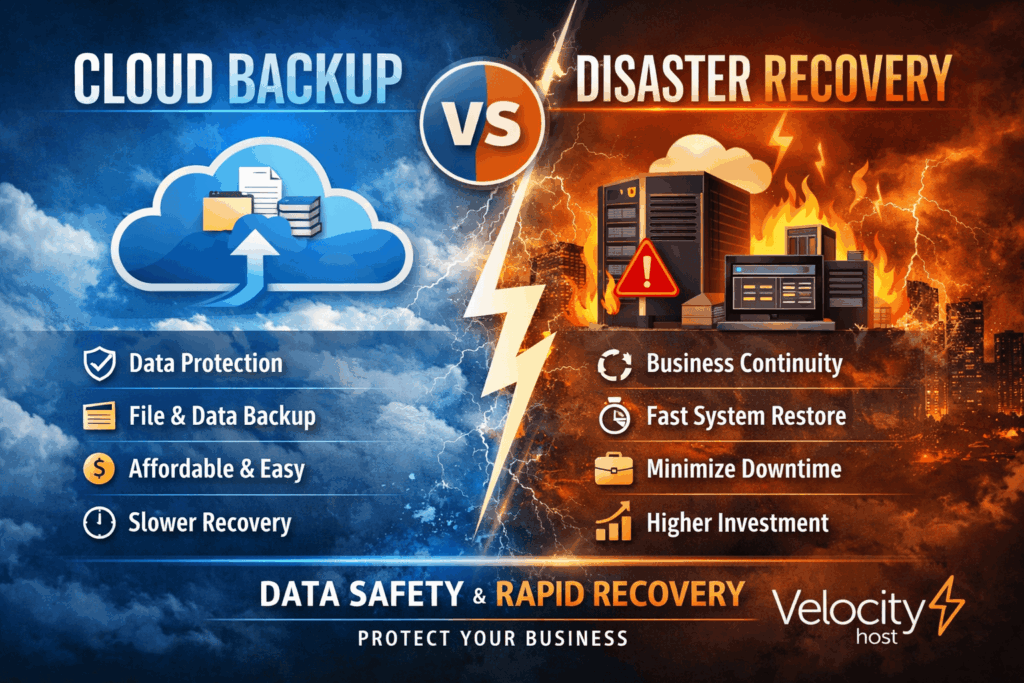
For small business owners, data loss and downtime don’t just lie in the IT domain, they are acute business risks. Whether it’s a cyberattack, hardware failure, or human error, losing access to your systems and data means lost revenue, unhappy customers, and unproductive staff.
That’s why understanding the difference between cloud backup and disaster recovery is critical. While they’re often grouped together, they provide very different roles in protecting your business and its data.
What Is Cloud Backup?
Cloud backup is all about protecting your data.
It copies your files, databases, and systems to a secure off-site location, ensuring that if something goes wrong, your information will be able to be restored.
For small businesses, this is the foundation of any good IT strategy.
Why Cloud Backup Matters
- Protects against accidental deletion and human error
- Safeguards your business against ransomware and cyber threats
- Keeps critical files secure and available
- Removes the need for backup hardware in your office
- Is able to scale as your business grows
With a cloud backup solution, you’ll always have a copy of your data; however, restoring backups can take time, especially after a major incident.
That’s where a service like VelocityHost’s cloud backup solutions comes in. We provide secure, automated backup solutions that are tailored for Australian businesses.
What Is Disaster Recovery?
Disaster recovery is all about ensuring your business keeps running, not just recovering data.
DR ensures that your entire IT environment – servers, applications, and third-party systems can be restored as quickly as possible after a disruption, with minimal data loss.
Why Disaster Recovery Matters
- Minimises business downtime and lost productivity
- Keeps your business functional during IT outages
- Enables fast recovery after cyberattacks
- Protects business reputation and customer experience
- Supports business continuity planning
For small businesses that rely on websites, CRMs, accounting systems, booking systems or other customer platforms, even a few hours of downtime can be costly.
VelocityHost’s disaster recovery services are designed to get your business online fast, with minimal disruption and loss of data.
Cloud Backup vs Disaster Recovery: What’s the Difference?
| Feature | Cloud Backup | Disaster Recovery |
|---|---|---|
| Focus | Data protection | Business continuity |
| Recovery Time | Hours to days | Minutes to hours |
| Scope | Files and data | Entire systems and infrastructure |
| Cost | More affordable | Higher investment |
| Best For | Preventing data loss | Preventing downtime |
What Does Your Small Business Actually Need?
Here’s the reality: most small businesses need both Cloud Backup & Disaster Recovery solutions.
- Cloud backup ensures that your data is protected and recoverable
- Disaster recovery ensures your business can continue operating in an emergency
If you only have backups, you might be able to recover your data, but your business could still be offline for days.
If you only have disaster recovery, you may be able to restore IT systems quickly, but risk losing critical data that wasn’t backed up.
A Smarter Approach to Business Continuity
The best strategy is a combined solution that covers both data & operations protection.
With the right IT setup, you can:
- Recover lost files quickly
- Stay productive during outages
- Reduce financial and operational risk
- Gain peace of mind knowing your business is protected
For Australian small businesses, working with a provider like VelocityHost ensures your solutions are tailored to your needs, compliant with Australian standards, and supported by locally based experts who understand your environment.
Downtime and data loss can happen to any business at any time, no matter the size. The difference in outcomes is based upon how prepared you are.
Cloud backup and disaster recovery are critical to ensure your business is minimally impacted during a crisis.
Email Us...
For small and medium businesses (SMBs) in Australia, protecting your data is the lifeblood of your business. Whether it’s customer records, financial data, bookings, or day-to-day operations, losing data costs your business time, money, and reputation. Understanding the differences between cloud backup vs local backup, and cloud backup vs external…
Australian small and medium businesses rely on cloud technology to store and manage their data. Popular services such as Google Drive, Dropbox, and Microsoft OneDrive have made it easy to access files from anywhere. A common misconception is that cloud storage automatically protects your business data. In actuality, cloud storage…
For people and businesses who give a S#!T about their data! As a #Truenas partner and #ZFS fanboy, I’ve noticed over the years there is nothing here in Oz that caters for native ZFS replication from source > target on public cloud. Unless you personally deploy 2+ x ZFS servers…
Your website is s a critical business asset. Whether you’re selling products, generating leads, or promoting your brand, the performance, security, and reliability of your site directly affect your business success. That’s where managed WordPress hosting in Australia becomes essential. Unlike shared web hosting, which simply gives you server space,…
For small and medium business (SMB) owners, analytics should provide clarity and not confusion. You want to understand where your leads come from, what pages convert, and how customers move through your website. But many business owners find themselves overwhelmed by dashboards, reports, and data they never use. Two of…

Gerardo Altman, Director of Problem Solving
With over 25 years’ experience in the IT industry, Gerardo Altman is a key solutions architect and MD of Velocity Host, with a love for Tetris and complex puzzles of every nature you'll find me hard at work doing what I do best – finding solutions.